
Frequently Asked Questions
We know that there are several queries regarding the food groups and drinks/ fluids one should prefer in such cases.
Our aim with the questions and answers presented in this section is to address the main concerns regarding which foods and drinks one should prefer or avoid when suffering from constipation.
There are no specific foods that have been proven to directly cause constipation. However, certain foods containing casein or lactose, such as milk and cheese, may contribute to stool retention and worsen constipation symptoms.
Additionally, foods that are rich in fat and low in dietary fiber may slow down digestion and lead to reduced stool bulk.
Therefore, examples of foods that may indirectly contribute to constipation or escalate it – and it’s better to be avoided – include red meat, milk, cheese, potato chips, sweets, fried foods, etc.
When someone suffers from constipation, he/she should include foods rich in dietary fiber in the diet. Dietary fiber is categorized into soluble and insoluble.
Soluble fiber is found in legumes, nuts, certain vegetables, and in the flesh of fruits. It undergoes fermentation by the beneficial intestinal microorganisms and increases stool mass by increasing water content in the stool (softening it and facilitating intestinal transit). Soluble fiber is found in higher amounts in most of the fruits (e.g., oranges, tangerines), nuts—especially almonds—carrots, peas, beans, onions, etc.
Insoluble fiber, which is found in whole grains, the skin of fruits, and certain vegetables, increases stool bulk and facilitates evacuation due to its effect on intestinal motility. Examples of foods rich in insoluble fiber include green beans, peas, potatoes, cauliflower, kiwis, prunes, figs, raisins, sesame paste (tahini), and whole wheat flour.
Probiotics do not relieve constipation directly, but they can certainly help. Foods that contain probiotics include kefir, traditional yogurt (with skin), soft and mature cheeses (such as cheddar, parmesan, feta, and myzithra), and olives.
Probiotics are scientifically documented to play an important role in the proper functioning of the intestine and the entire gastrointestinal system, as they help maintain a healthy intestinal microflora. Studies also show that probiotics are associated with increased intestinal content and motility. Therefore, indirectly, probiotics support both the prevention and management of constipation.
The intestinal microflora consists of microorganisms that normally inhabit the intestine under physiological conditions. Disruption of the intestinal microflora by pathogenic microorganisms may lead to health problems. According to the definition of the World Health Organization (WHO) released in October 2001, probiotics are beneficial microorganisms that, when administered in adequate amounts, confer health benefits to the host.
An important factor in managing constipation is adequate fluid intake. Proper hydration contributes to effective water reabsorption in the large intestine and to stool formation. Therefore, any beverage that promotes hydration can help, with water being the most important.
Other beverages that may contribute to hydration include fruit juices, vegetable juices, and soups. Finally, some observational studies suggest that drinking lukewarm water with lemon and honey after waking up in the morning may help against constipation.
In general, the consumption of warm or lukewarm beverages is considered more beneficial than cold ones in managing constipation.
Yogurt does not provide immediate relief from constipation. However, it is a food that has undergone fermentation by beneficial microorganisms and is therefore rich in probiotics. Regular consumption of yogurt (especially traditional sheep’s or goat’s yogurt), as well as other foods rich- in probiotics, within the context of a balanced diet, may help manage constipation by maintaining a healthy intestinal microflora.
For better effectiveness, yogurt can be combined with foods high in dietary fiber, such as fruits, whole-grain cereals, or nuts—for example, yogurt with dried prunes and/or walnuts.
Chamomile does not appear to negatively affect constipation. On the contrary, some studies suggest it may be helpful when consumed as part of a balanced diet. It is hypothesized, though not conclusively proven, that chamomile has a mild laxative effect. Moreover, it helps by contributing to an adequate hydration of the body.
Proper hydration is very important both for the prevention and management of constipation. Therefore, tea can be helpful when consumed as part of an overall balanced diet.
Water consumption is very important both for the prevention and management of constipation. Proper hydration is one of the key factors influencing stool formation in the large intestine and facilitating its passage through the rectum by softening it.
In addition to water, other fluids such as soups and juices also contribute to proper hydration and may support the prevention and management of constipation.
Kefir, like yogurt, does not provide immediate relief from constipation. However, it is a fermented food and is therefore naturally rich in beneficial microorganisms, namely probiotics.
More specifically, kefir is produced from milk to which a culture of microorganisms (“kefir seeds”) from the lactic acid bacteria family has been added. These microorganisms ferment the milk (cow’s or goat’s), resulting in kefir. In appearance and taste, it resembles milk or yogurt, but it is a food that is significantly richer in nutrients, particularly probiotics.
Probiotics are very important for the proper functioning of the gastrointestinal system, as they help maintain a healthy intestinal microflora.
For enhanced benefits, kefir can be combined with foods high in dietary fiber, such as fruits, whole-grain cereals, or nuts—for example, a smoothie with kefir, seasonal fruits, and whole tahini.
International dietary guidelines recommend the daily consumption of at least five servings of a variety of fruits and vegetables. However, the exact recommendation should be individualized according to each person’s specific needs, depending on height, body weight, age, lifestyle, and various other factors.
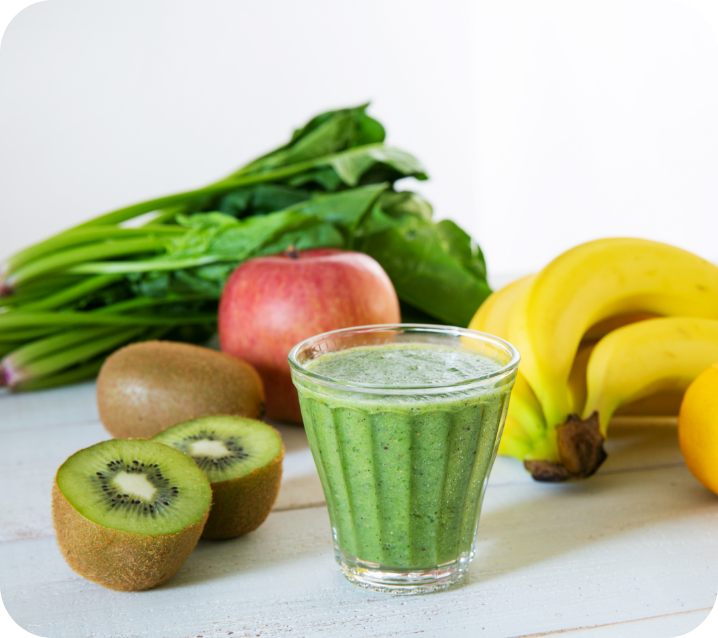
One serving of fruit may be considered, for example, a medium-sized fruit such as an apple or pear, alternatively a large fruit in half such as a banana, or two small fruits like figs or kiwis.
Ideally, all our meals should be comprised by fruits and vegetables. For specified dietary advice and guidance, it is advisable to consult a qualified professional (e.g., a Nutritionist–Dietitian).
Milk does not appear to help in managing constipation. On the contrary, its high content in casein and lactose may lead to gas formation and worsen uncomfortable symptoms associated with constipation, such as bloating and flatulence.
Additionally, milk is a food relatively low in dietary fiber, which is an essential component in the management of constipation.
Fried foods are low in dietary fiber and, within the context of an unbalanced diet (low intake of fiber and limited consumption of fruits and vegetables), may worsen constipation.
Additionally, their high fat content can delay gastric emptying—that is, the passage of food through the gastrointestinal tract—thereby making bowel movements more difficult.